

Self-Rescuer
Following fatal accidents at Whitehaven (1947) and Creswell (1950) in which large numbers of men were asphyxiated, the Chief Inspector of Mines decreed that ‘Self-Rescuers’ should be provided for all men working underground to protect them from lethal doses of carbon monoxide gas.
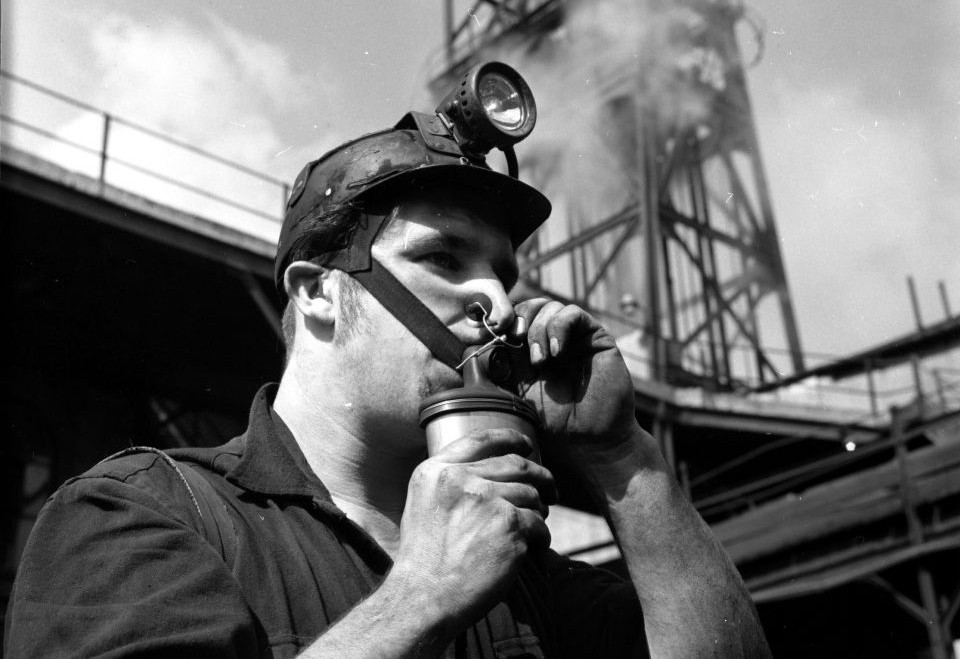
Fig. 1 Self Rescuer trials at Sherwood Colliery, NCB North Nottinghamshire Area, in 1963. Photo Credit – Coal Authority.
Trials commenced in 1953 but the available technology proved unreliable and the scheme was abandoned. Trials resumed ten years later but it wasn’t until 1967 that a viable solution was found. By the 1970’s every man entering a mine was required to carry a self-rescuer and keep it on his person during the whole of his time underground. Stored in a metal container attached to the miner’s belt, the device was designed to give at least one hour’s protection from the effects of carbon monoxide gas. Modern Self-Rescuers are no less important today and offer much longer periods of protection against toxic gases.

Fig. 2 Self Rescuer as part of the mining heritage display at the South Derbyshire Mining Preservation Group’s HQ at Gresley Old Hall, Church Gresley. Photo Credit: MuBu Miner
How to Use Your Self-Rescuer
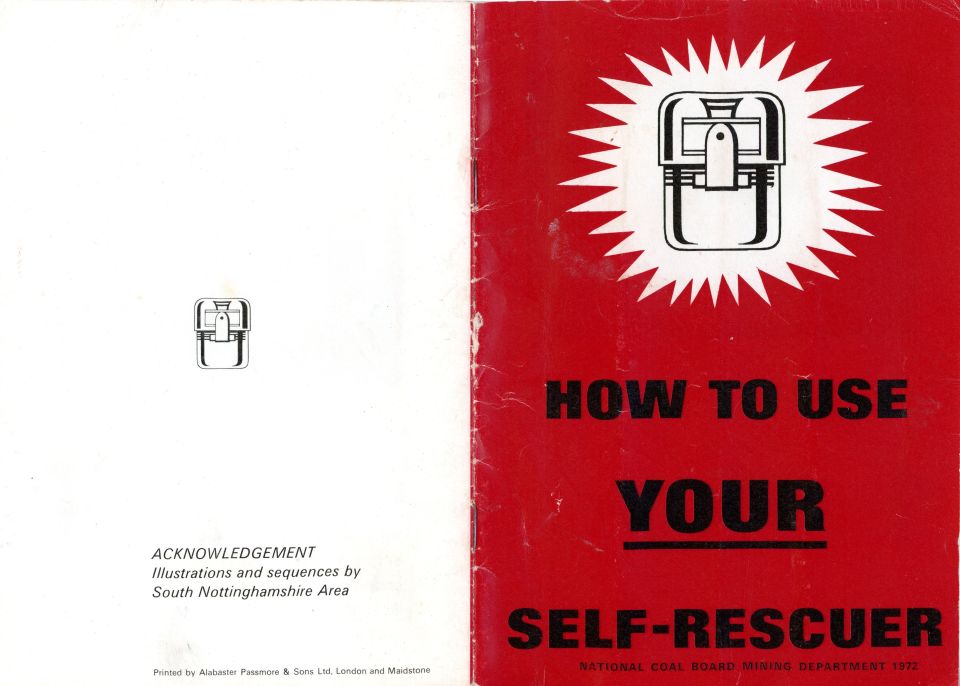
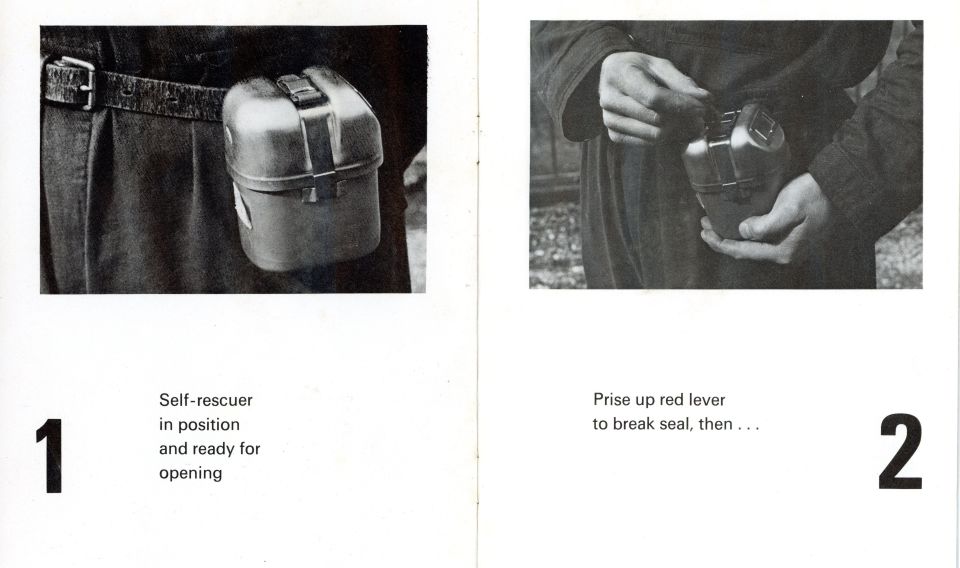
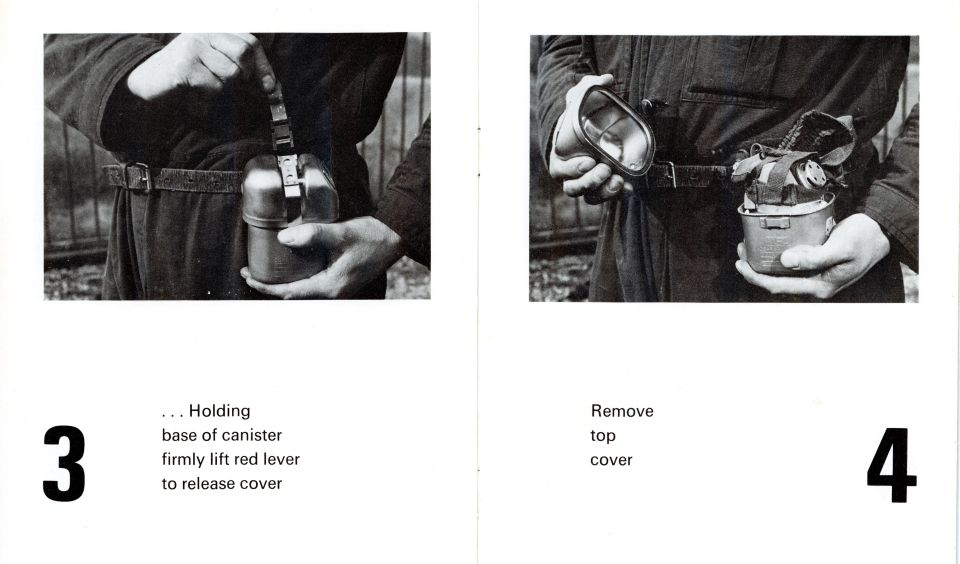
Booklet produced by the National Coal Board (NCB) in 1972 on how to use a Self Rescuer. Source: NCB Mining Department 1972. Part of MuBu Miner collection.
Illustrations and sequences in the photos by NCB South Nottinghamshire Area.
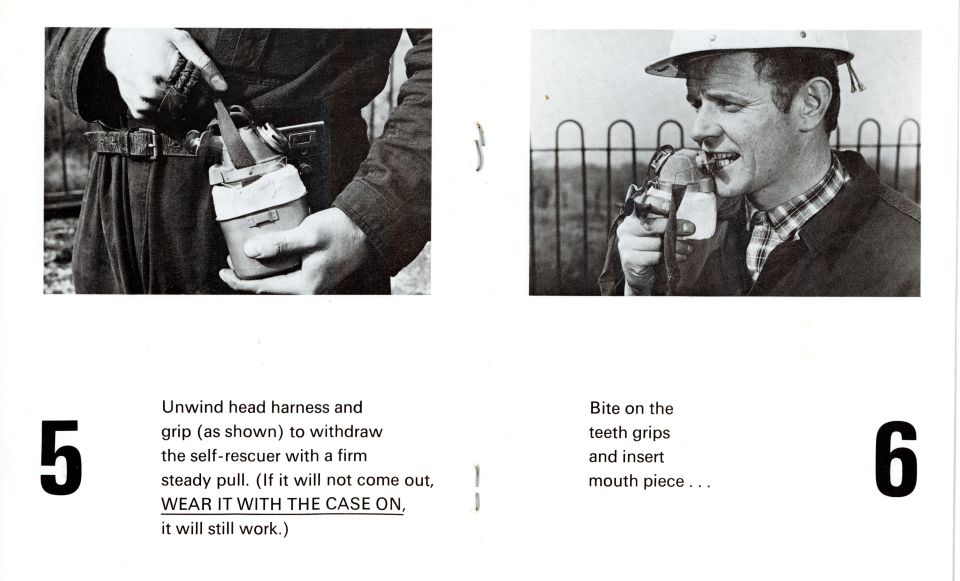
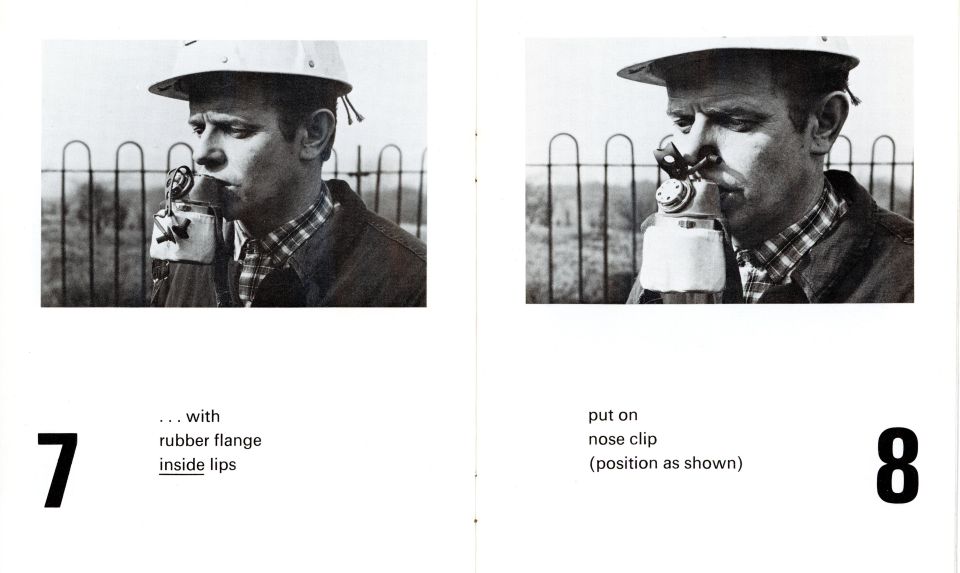
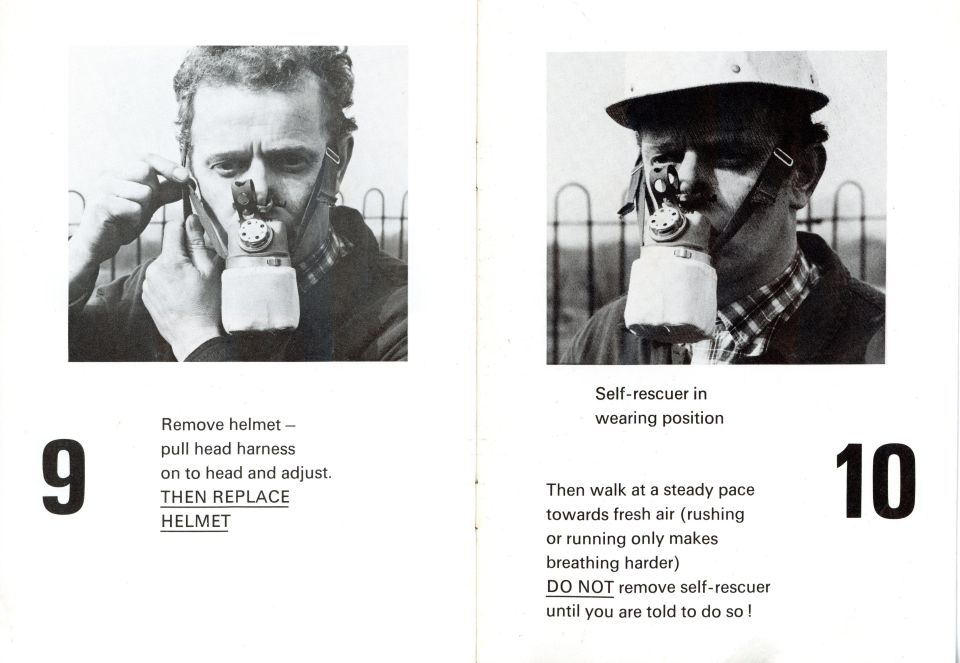
Life Saver
Early 1970’s NCB booklet ‘All you need to know about Self Rescuers’.
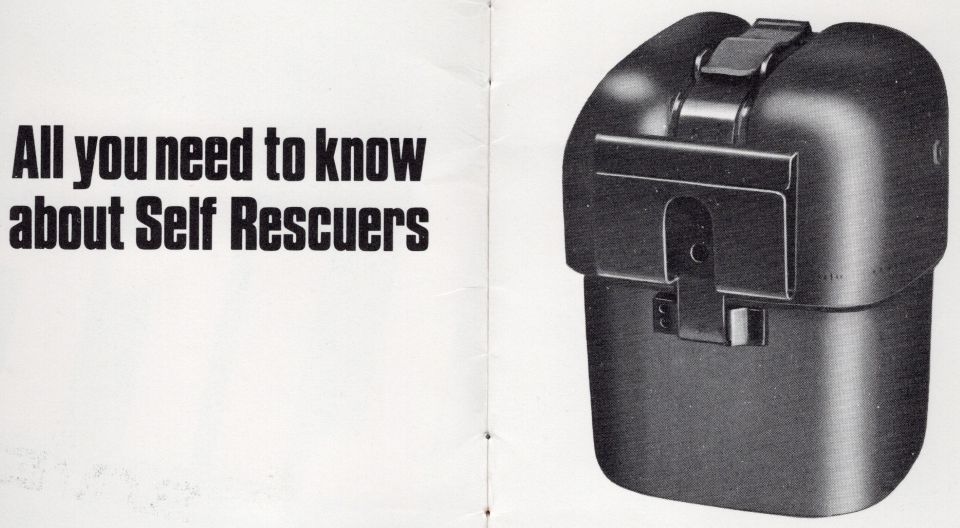
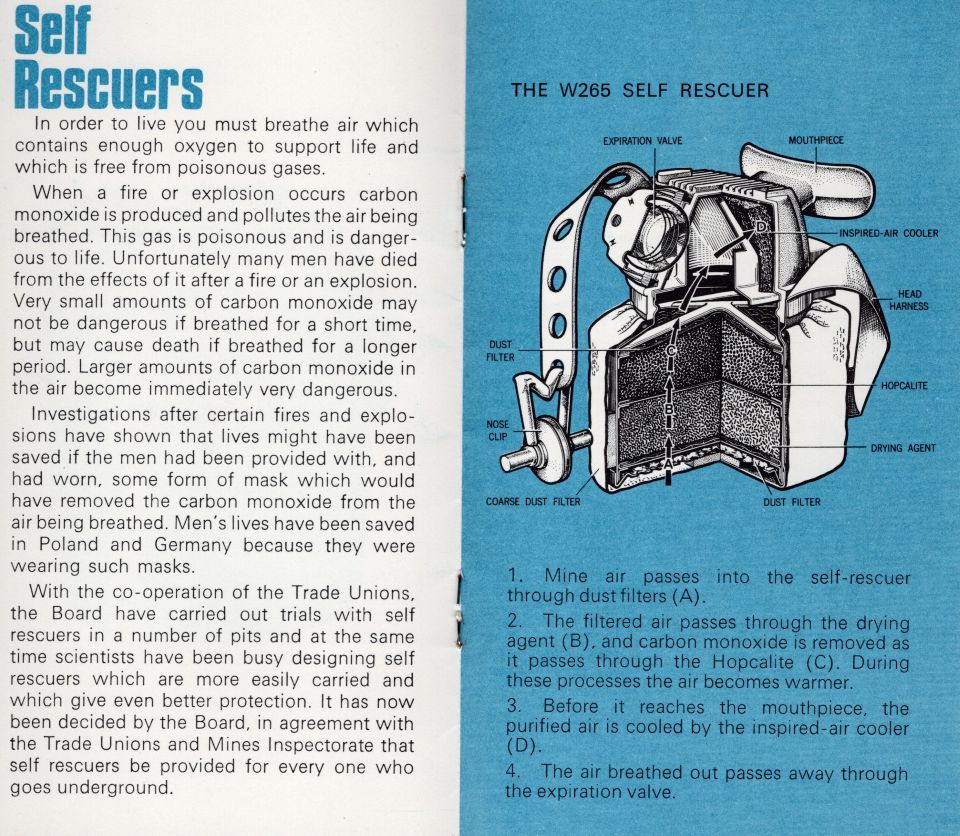
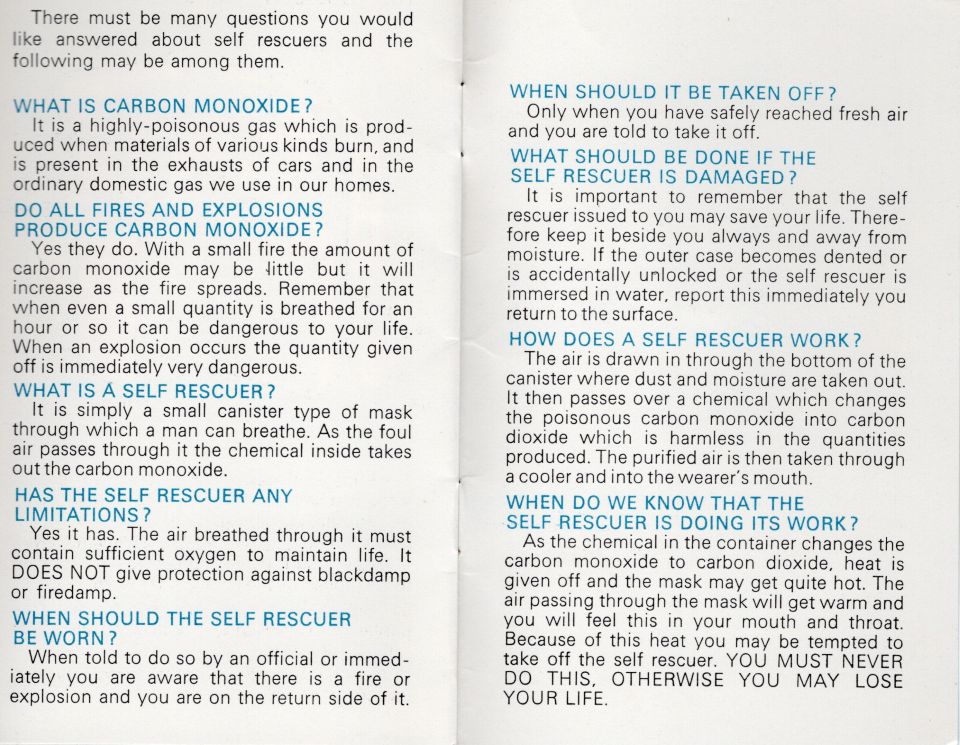
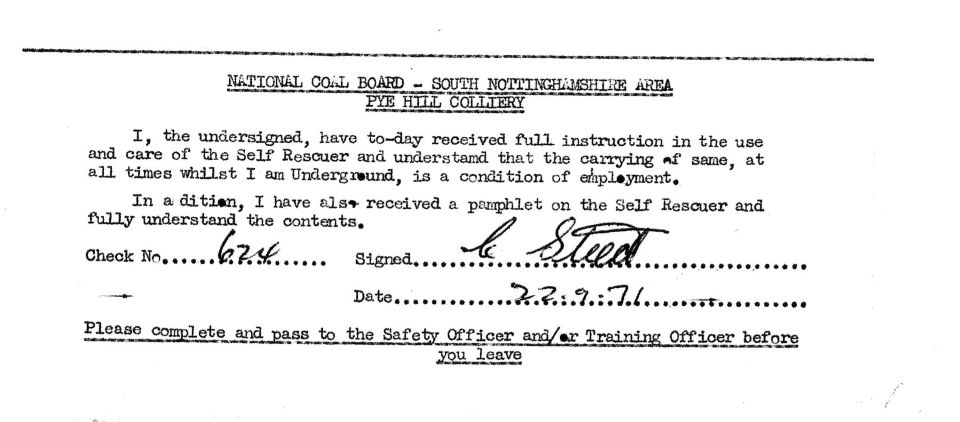
Fig. 4: NCB Self Rescuer training slip. Source – David Amos collection.
Video clip: Historical Coalmining Entertainer, David Coleman, demonstrates the use of the self rescuer as part of his historical coalmining show. (3mins, 50 secs)

Fig. 5: Self Rescuer as part of the Pleasley Pit Mining Museum digital trail created in 2024 by Mine2Minds Education.
Pleasley Pit Mining Museum digital trail, No 7. The Lamp Cabin at https://mytrail.co.uk/trail05-07-lamp-room/


